

Browse our wide selection of repair glues, perfect for small household repairs and DIY projects. The repair range includes our best super glues, plastic glues and all-purpose glues. All are expertly designed to create a secure bond to a variety of materials.




Step-by-step how to's
Our how-to videos guide your through the best ways to use your repair adhesive, so you can get stuck into your next DIY project.
Discover hints and tips to bring your broken or damaged items back to life - all in a few drops. With our guidance, you can contribute to a more sustainable future by repairing your items instead of throwing them away. Don't bin it, fix it! Be a #REPAIRHERO.
Frequently asked Questions
Which Super Glue is best: Gel or Liquid?
The best option depends on the type of repair you are carrying out. Bostik Super Glue Gel is ideal when you need a non-drip adhesive that stays in place and provides greater application control, particularly on vertical surfaces.
Bostik Super Glue Liquid is better suited to precision bonding and fast-flowing applications where the adhesive needs to spread into tight-fitting joints. For many everyday repairs, choosing the adhesive that matches the application is more important than choosing the strongest option.
Does Super Glue work in the cold?
Yes, Bostik Super Glue remains effective in cold conditions and is designed to provide a strong, durable bond at low temperatures. Many Bostik Super Glue products continue to perform reliably in temperatures as low as -20°C.
For the best results, ensure the surfaces are clean and dry before application and follow the instructions on the product packaging.
How should surfaces be prepared before using BL 50?
Before applying Bostik BL 50, clean and degrease the surface you want to treat. Once the surface is prepared, spray the product from a distance of approximately 20-30 cm and work it into the surface using a soft cloth.
Proper preparation helps Bostik BL 50 lubricate, protect and penetrate more effectively on metal parts and mechanical components.
How does Fabric Glue join fabric together?
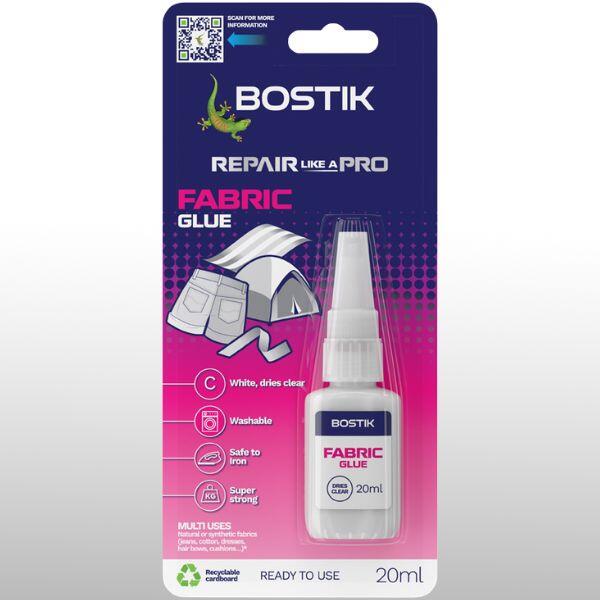
Bostik Fabric Glue works by joining fabric fibres together to create a flexible bond without the need for sewing. As the adhesive dries, it helps hold the materials in place while remaining suitable for clothing repairs, alterations and textile projects.
This allows Bostik Fabric Glue to be used for tasks such as repairing tears, attaching patches, creating hems and completing fabric-based craft projects. For best results, apply the adhesive to clean, dry fabric and allow it to dry fully before use.
How long before fabric glue is fully dry?
Although Bostik Fabric Glue may feel dry sooner, it is best to wait approximately 24 hours before using, washing or regularly handling the bonded fabric.
Temperature, humidity, fabric type and adhesive thickness can all affect drying time. Allowing the adhesive to dry completely helps achieve a stronger and more durable repair.
Is fabric glue washable?
Yes, Bostik Fabric Glue is designed to create a durable bond that can withstand washing once the adhesive has fully cured. This makes it suitable for clothing repairs, fabric alterations and a variety of textile craft projects.
For the best results, allow Bostik Fabric Glue to dry completely before washing the item. Following the product instructions can help maximise bond strength and durability.
Is super glue flammable?
Bostik super glues are non-flammable products that do not easily ignite or burn during normal use. To maintain product performance and safe handling, always follow the instructions provided on the packaging and store the adhesive in a suitable location.
What temperature can super glue withstand?
Bostik Super Glue Liquid and Bostik Super Glue Gel can withstand temperatures from-55°C to +80°C, providing reliable bonding performance across a wide range of everyday repair applications.
For applications exposed to temperature fluctuations, check that the adhesive is suitable for the materials and conditions involved before use.
Is super glue waterproof or water resistant?
Bostik Super Glue Liquid and Bostik Super Glue Gel are water and heat resistant. However, the available product information does not describe either product as waterproof.
If your project may be exposed to moisture, choose an adhesive that is suitable for the intended conditions and follow the product instructions for best results.
What is the safest way to remove Super Glue from skin?
If Bostik Super Glue bonds to your fingers or skin, wash the area with warm soapy water and gently separate the skin using a blunt object if needed.
Avoid pulling bonded skin apart forcefully, as this may damage the skin. If the adhesive cannot be removed safely or irritation persists, seek appropriate medical advice.
What does viscosity mean?
Viscosity describes how easily a liquid flows. A low-viscosity adhesive is thinner and flows more easily, while a high-viscosity adhesive is thicker and is less likely to run or drip.
In adhesives and sealants, viscosity can affect application, spreadability and how the product performs on vertical or horizontal surfaces.
What is Super Glue made from?
Bostik Super Glue is made from modified ethyl cyanoacrylate, a fast-curing adhesive technology designed to create strong bonds in seconds.
When the adhesive comes into contact with moisture on a surface, it cures rapidly and forms a durable bond. This makes Bostik Super Glue suitable for a wide range of household repairs and precision bonding applications.
When should you use Repair-All instead of Super Glue?
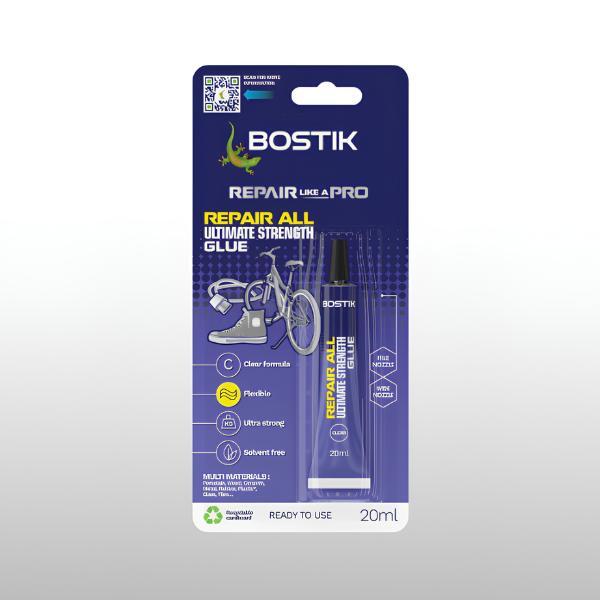
Use Bostik Repair-All when you need a versatile adhesive that can bond a wide range of materials and accommodate movement after curing. It is designed for repair and assembly applications where flexibility can be important.
Choose Bostik Super Glue when you need a fast-curing cyanoacrylate adhesive for quick repairs and precision bonding. The adhesive forms a strong bond in seconds, making it ideal for small repairs where speed is a priority.
How long can Super Glue be stored?
Bostik Super Glue has a shelf life of 12 months from the date of manufacture when stored under the recommended conditions.
For best results, store the adhesive in a cool, dry place away from direct sunlight and keep the container tightly closed when not in use. Proper storage can help maintain performance throughout its shelf life.
How can fabric glue help prevent fraying?
Bostik Fabric Glue can help reduce fraying by bonding loose fibres together and strengthening fabric edges. Once cured, it forms a flexible bond that is suitable for repairs, alterations and textile craft projects where extra edge reinforcement is needed.
For best results, apply the adhesive to clean, dry fabric and allow it to cure fully before handling or washing the item.
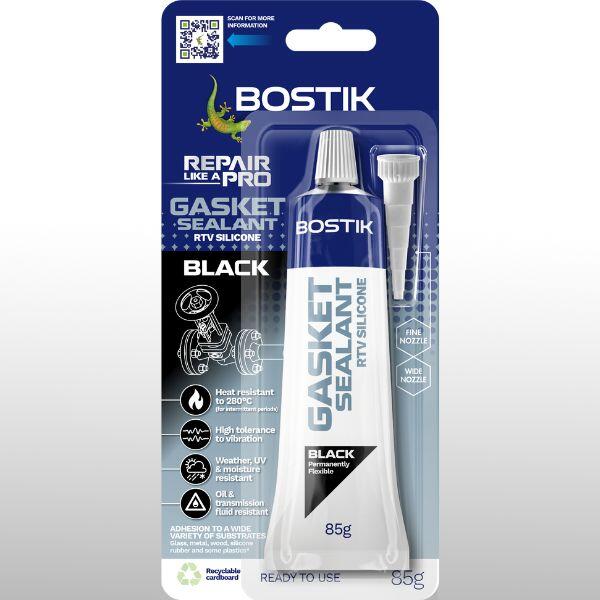
Is Gasket Sealant suitable for vertical applications?
Yes, Bostik Gasket Sealant is suitable for use on vertical surfaces. Its non-slump formulation helps the sealant stay in place after application, making it suitable for vertical and overhead sealing applications.
For best results, apply the sealant to clean, dry surfaces and use a continuous, even bead as recommended in the application instructions.
Is Gasket Sealant suitable for high-vibration applications?
Yes, Bostik Gasket Sealant is suitable for applications where vibration is present. Its RTV silicone formulation is designed to resist vibration and thermal cycling, helping to maintain a durable seal in demanding operating conditions.
This makes it suitable for automotive and equipment sealing applications where components may be exposed to movement, temperature changes and mechanical stress during normal operation.
How do you remove excess Gasket Sealant?
Yes, excess Bostik Gasket Sealant can be removed.
If the sealant is still uncured, remove the excess using a suitable solvent. Once the sealant has fully cured, it must be removed mechanically.
For the best finish, remove excess sealant promptly after application and before full cure occurs.
What is the correct way to apply Gasket Sealant?
To apply Bostik Gasket Sealant, first ensure all surfaces are clean, dry and free from dust, dirt, rust, oil and grease. Cut the nozzle to the required bead size and apply a continuous, even bead of sealant.
For best results, apply a bead approximately 2 to 4 mm wide using steady pressure. If required, smooth the sealant with a spatula dipped in mild detergent and then allow it to cure. The sealant typically becomes tack-free within 8 to 15 minutes and reaches full cure in approximately 24 hours.
How long does Gasket Sealant take to fully cure?
Bostik Gasket Sealant typically becomes tack-free in approximately 8 to 15 minutes and reaches full cure in around 24 hours under normal conditions.
Cure times can vary depending on factors such as temperature, humidity, bead size and ventilation. For best results, allow the sealant to cure fully before placing the sealed component into service.
What temperature can Gasket Sealant handle?
Bostik Gasket Sealant is designed for high-temperature applications and can withstand temperatures of up to 260°C under continuous exposure and 317°C intermittently.
Its RTV silicone formulation is also designed to resist vibration, thermal cycling, moisture, oil, water and automotive fluids, making it suitable for demanding sealing applications in automotive and equipment environments.
What is the best way to store Gasket Sealant?
Store Bostik Gasket Sealant in a cool, dry place and keep the container tightly closed when not in use. Following the recommended storage conditions helps maintain product performance and maximise shelf life.
Always store the product according to the instructions provided on the packaging and technical data sheet, and protect it from conditions that could affect the sealant before use.
What needs to be done before applying Gasket Sealant?
Before applying Bostik Gasket Sealant, make sure all surfaces are clean, dry and free from dust, dirt, rust, oil and grease. Proper surface preparation helps the sealant adhere correctly and achieve a reliable seal.
Once the surfaces have been prepared, apply a continuous, even bead of sealant using the recommended application method.
Can Gasket Sealant be used on automotive components?
Yes, Bostik Gasket Sealant is suitable for many automotive sealing applications. It is an RTV silicone sealant and gasket maker designed to provide a durable, flexible seal that resists heat, vibration, oil, water and automotive fluids.
It can be used on automotive components such as valve covers, timing covers, crankcases, radiators and thermostats, as well as for sealing flanged joints in a wide range of equipment.
Can Gasket Sealant withstand oil and automotive fluids?
Yes, Bostik Gasket Sealant is designed to resist oil, water and automotive fluids, making it suitable for automotive and equipment sealing applications.
Its RTV silicone formulation is also resistant to vibration and thermal cycling, helping it maintain a durable seal in demanding operating environments.
Which colour Gasket Sealant should you choose?
Bostik Gasket Sealant is available in Red, Black and Grey colour options.
The choice of colour is typically based on the appearance requirements of the application or the component being sealed. All variants are designed for sealing, bonding and formed-in-place gasket applications.
Where can Gasket Sealant be used?
Bostik Gasket Sealant can be used for sealing and bonding applications where a durable, flexible seal is required. It is suitable for use as a formed-in-place gasket (FIPG) on flanged joints in equipment such as transmissions, compressors and pumps.
It can also be used on valve covers, timing covers, crankcases, radiators and thermostats, as well as for other general-purpose sealing and bonding applications.
How do I know how to stick two materials together?
If you're not sure which adhesive to use, try the Bostik Glue Guide.
The Bostik Glue Guide helps you find the most suitable adhesive based on the materials you want to bond and the type of project you are working on. Whether you're repairing, crafting or completing a DIY job, it can help you choose the right product.
How do you prepare fabric before using Fabric Glue?
Before using Bostik Fabric Glue, make sure the fabric is clean, dry and free from dust, dirt, oils and loose fibres.
Preparing the fabric properly helps the adhesive bond more effectively and can improve the durability of repairs, alterations and textile projects. For the best results, allow the adhesive to dry fully before using or washing the item.
How do you prepare hard plastics before bonding?
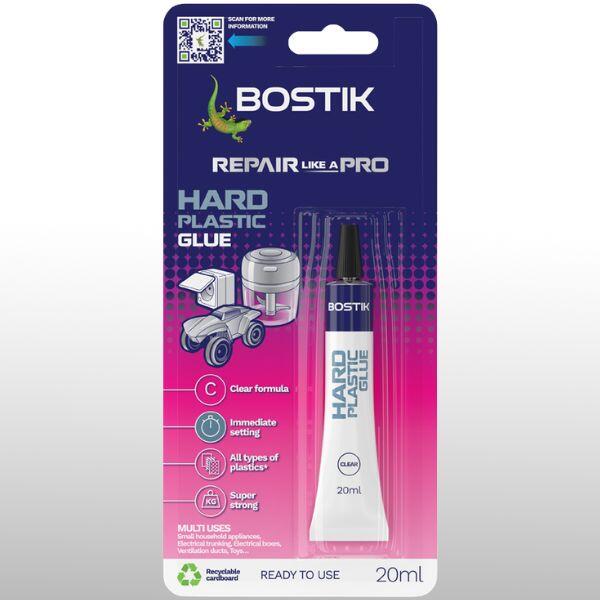
Before applying Bostik Hard Plastic Adhesive, ensure the plastic surfaces are clean, dry and free from dust, grease, oil and other contaminants.
For the strongest bond, make sure the parts fit together properly and remove any residues that could interfere with adhesion. Good surface preparation helps improve bonding performance and reliability when repairing hard plastic items.
How do you prepare leather before using Leather Repair?
Before applying Bostik Leather Repair, make sure the leather or imitation leather surface is clean, dry and free from dust, grease, polish and other contaminants.
Preparing the material properly helps the adhesive make better contact with the surface and can improve the durability of leather repairs, patching and restoration projects. Allow the cleaned surface to dry completely before applying the adhesive.
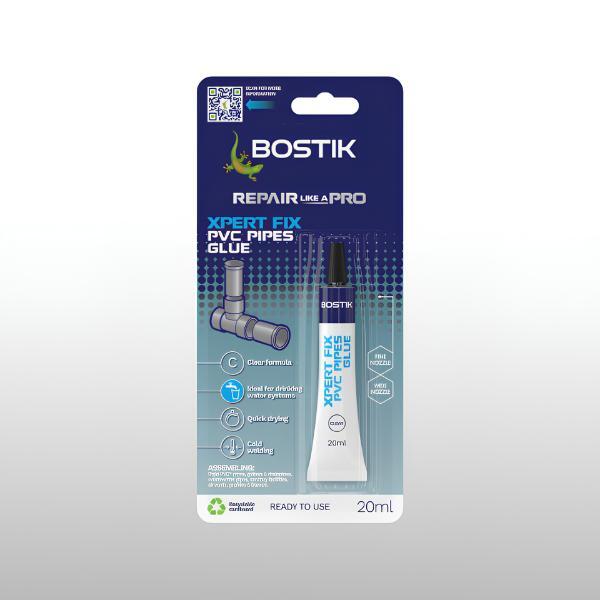
How do you prepare PVC surfaces before using XpertFix?
Before applying Bostik XpertFix, make sure the PVC, CPVC or rigid PVC surfaces are clean, dry and free from dirt, dust, grease and other contaminants that could interfere with adhesion.
For the most reliable bond, ensure the mating surfaces fit together correctly and remove any residue before application. Proper preparation helps Bostik XpertFix form a strong bond on pipe and rigid plastic repair projects.
How do you prepare soft plastics before bonding?
Before applying Bostik Soft Plastic Adhesive, make sure the surfaces are clean, dry and free from dust, grease, oil and other contaminants that could interfere with adhesion.
For the best results, ensure the surfaces fit together properly and remove any residue before application. Proper surface preparation helps improve bonding performance and can contribute to a stronger, more reliable repair of soft plastic items.
How do you prepare surfaces before using Repair-All?
Before applying Bostik Repair All, make sure the surfaces are clean, dry and free from dust, grease, oil and other contaminants that could affect adhesion.
For the best bonding performance, ensure the materials fit together properly and remove any loose residue before application. Proper surface preparation helps create a stronger and more durable bond across a wide range of repair and assembly projects.
How do you prepare surfaces before using Super Glue?
Before applying Bostik Super Glue, make sure the surfaces are clean, dry and free from dust, dirt, grease and other contaminants.
For the best bonding performance, ensure the surfaces fit closely together and remove any residue that could interfere with adhesion. Proper surface preparation helps Bostik Super Glue form a stronger and more reliable bond.
What surface preparation is needed before using General Purpose Silicone?
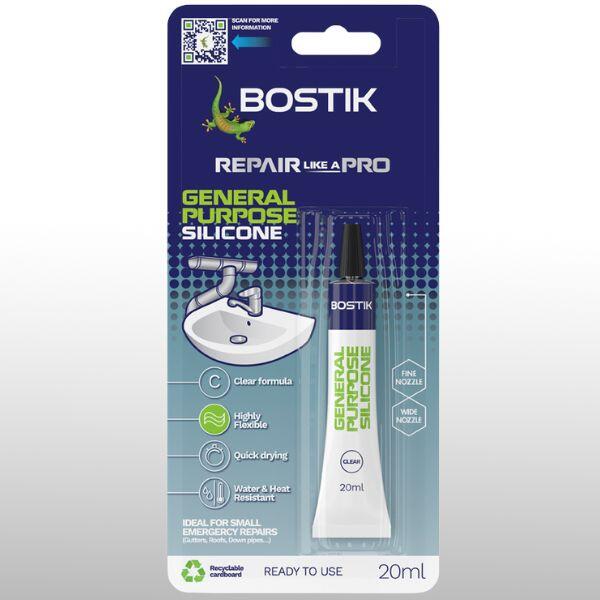
Before applying Bostik General Purpose Silicone, make sure all surfaces are clean, dry and free from dust, grease, oil and other contaminants.
Removing dirt, residue and loose material helps the silicone adhere more effectively and can improve sealing performance. Preparing the surface properly is especially important when creating watertight seals around joints, gaps and household fixtures.
What needs to be done before applying Wood Fix?
Before applying Bostik Wood Fix, ensure the surfaces are clean, dry, stable and free from dust, grease and other contaminants.
For the best bonding results, make sure the parts fit together correctly and remove any residue that could interfere with adhesion. Proper preparation helps improve bond quality and reliability when repairing or assembling wooden items.
What should you do before using T160?
Before using Bostik T160 Foam Cleaner, remove or protect any food products and packaging materials in the area being cleaned, then shake the aerosol can thoroughly before use.
When cleaning fabrics, upholstery or other delicate materials, test the cleaner on a hidden area first. This can help confirm suitability before treating the full surface.
What should you do before using T170 Air Spray?
Before using Bostik T170 Air Spray, make sure the item or area you want to clean is accessible and free from loose objects that could be disturbed by compressed air.
Hold the can upright during use and direct short bursts of air at the area being cleaned. Bostik T170 Air Spray is designed to remove dust and debris from hard-to-reach locations such as keyboards, electronic components, machine parts, cameras and instruments.
How do you get the best adhesion with Miracle Mounting Tape?
To achieve the best results with Bostik Miracle Mounting Tape, make sure the surface is clean, dry and free from grease, oil, moisture, dirt and other contaminants. Smooth, even surfaces generally provide the strongest adhesion.
Press the tape firmly and evenly against the surface to remove air bubbles and create optimal contact. For best performance, apply the tape within the recommended temperature range and avoid surfaces with imperfections that could reduce adhesion.
How long can BL 50 be stored?
Bostik BL 50 can be stored for up to 24 months when kept in its original unopened packaging under the recommended storage conditions.
For best results, store the product between +5°C and +25°C in shaded conditions. Correct storage helps maintain the performance and reliability of Bostik BL 50 throughout its shelf life.
How long can Fabric Glue be stored?
Bostik Fabric Glue can be stored for up to 18 months from the date of manufacture when kept under the recommended storage conditions.
For best results, store the adhesive below 30°C in a cool, dry place and keep the container properly closed when not in use. Correct storage helps maintain the performance of the adhesive throughout its shelf life.
How long can General Purpose Silicone be stored?
Bostik General Purpose Silicone can be stored for up to 12 months from the date of manufacture when kept in its original unopened packaging under the recommended storage conditions.
For best results, store the product in dry conditions and protect it from excessive heat and moisture. Proper storage helps maintain product performance throughout its shelf life.
How long can Hard Plastic Adhesive be stored?
Bostik Hard Plastic Adhesive can be stored for up to 12 months from the date of manufacture when kept under the recommended storage conditions.
For best results, store the adhesive in a cool, dry place and keep the container tightly closed when not in use. Proper storage helps maintain product performance throughout its shelf life.
How long can Leather Repair be stored?
Bostik Leather Repair can be stored for up to 12 months from the date of manufacture when stored as directed.
For best results, store the adhesive in cool, dry conditions below 30°C, away from direct sunlight, and keep the container properly closed when not in use. Correct storage helps maintain product performance throughout its shelf life.
How long can Repair-All be stored?
Bostik Repair-All can be stored for up to 12 months from the date of manufacture when kept in its original unopened packaging under the recommended storage conditions.
For best results, store the adhesive in dry conditions between +5°C and +30°C. Proper storage helps maintain product performance throughout its shelf life.
How long can Soft Plastic Adhesive be stored?
Bostik Soft Plastic Adhesive can be stored for up to 12 months from the date of manufacture when kept under the recommended storage conditions.
For best results, store the adhesive in its original packaging, in a cool, dry location and away from conditions that may affect product performance. Proper storage helps maintain the adhesive throughout its shelf life.
How long can T160 be stored?
Bostik T160 Foam Cleaner can be stored for up to 24 months when kept in its original unopened packaging under the recommended storage conditions.
For best results, store the product between +5°C and +25°C in shaded conditions. Proper storage helps maintain cleaning performance throughout the product's shelf life.
How long can Wood Fix be stored?
Bostik Wood Fix can be stored for up to 12 months when kept under the recommended storage conditions.
For best results, store the product in a cool, dry location between +10°C and +25°C and protect it from moisture and adverse weather conditions. Proper storage helps maintain adhesive performance throughout its shelf life.
How long can XpertFix be stored?
Bostik XpertFix can be stored for up to 12 months from the date of manufacture when stored under the recommended conditions.
For best results, store the product in a cool, dry location below 30°C, ideally between 20°C and 25°C, and keep the container properly closed when not in use. Correct storage helps maintain product performance throughout its shelf life.
When should you use a Cool Craft Melt Glue Gun instead of Super Glue?
Use a Bostik Cool Craft Melt Glue Gun when working on craft projects, decorations, model making or other creative applications that benefit from hot melt glue sticks and controlled adhesive application.
Choose Bostik Super Glue when you need a fast-curing cyanoacrylate adhesive for quick repairs and precision bonding. Bostik Super Glue bonds many non-porous materials in seconds, making it a better choice for small repairs where speed and accuracy are important.
When should you use a Hot Melt Glue Gun instead of Super Glue?
Use the Bostik HG3 Hot Melt Glue Gun when you need to assemble, position or bond craft materials, decorative items or larger components using hot melt glue sticks. It is often a practical choice for hobby, craft and general DIY projects where a larger adhesive bead is required.
Choose Bostik Super Glue when you need a fast-curing cyanoacrylate adhesive for quick repairs and precision bonding. Bostik Super Glue bonds many non-porous materials in seconds, making it more suitable for small repairs where accuracy and speed are important.
When should you use a Mini Hot Melt Glue Gun instead of Super Glue?
Use a Bostik Mini Hot Melt Glue Gun when working on craft projects, decorations, hobby applications or larger assemblies that benefit from hot melt glue sticks and a more generous adhesive bead.
Choose Bostik Super Glue when you need a fast-curing cyanoacrylate adhesive for quick repairs and precision bonding. Bostik Super Glue bonds many non-porous materials in seconds, making it a better choice for small repairs where speed and accuracy are important.
When should you use Fabric Glue instead of Super Glue?
Use Bostik Fabric Glue when repairing, altering or bonding fabrics and textiles. The adhesive is designed to create a flexible bond and is suitable for clothing repairs, hems, patches and other fabric-based projects.
Choose Bostik Super Glue when you need a fast-curing cyanoacrylate adhesive for quick repairs and precision bonding. For projects where fabric flexibility is important after bonding, Bostik Fabric Glue is generally the more suitable option.
When should you use General Purpose Silicone instead of Super Glue?
Use Bostik General Purpose Silicone when you need to seal joints, fill gaps or create a flexible, watertight seal around household fixtures and surfaces. The product is designed as a silicone sealant rather than a rapid-bonding adhesive.
Choose Bostik Super Glue when you need a fast-curing cyanoacrylate adhesive for quick repairs and precision bonding. If the goal is to bond materials together quickly, Bostik Super Glue is generally the better choice. If the goal is sealing, waterproofing or filling a joint, Bostik General Purpose Silicone is usually more suitable.
When should you use Hard Plastic Adhesive instead of Super Glue?
Use Bostik Hard Plastic Adhesive when repairing or bonding hard plastic materials. The adhesive is specifically formulated for hard plastic applications and is intended for substrates such as ABS, nylon, PVC-U and high-impact polystyrene.
Choose Bostik Super Glue when you need a fast-curing cyanoacrylate adhesive for quick repairs on a variety of non-porous materials. For projects involving hard plastics, Bostik Hard Plastic Adhesive is generally the more suitable option because it has been specifically developed for that type of repair.
When should you use Soft Plastic Adhesive instead of Super Glue?
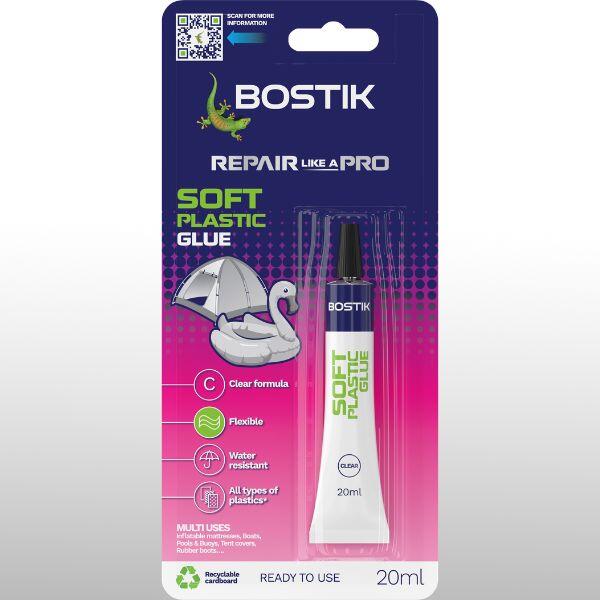
Use Bostik Soft Plastic Adhesive when repairing or bonding soft plastic materials. The adhesive is specifically formulated for soft plastic applications and is intended for substrates that require a dedicated plastic-bonding solution.
Choose Bostik Super Glue when you need a fast-curing cyanoacrylate adhesive for quick repairs on a variety of non-porous materials. For projects involving soft plastics, Bostik Soft Plastic Adhesive is generally the more suitable option because it has been specifically developed for that type of repair.
When should you use Wood Fix instead of Super Glue?
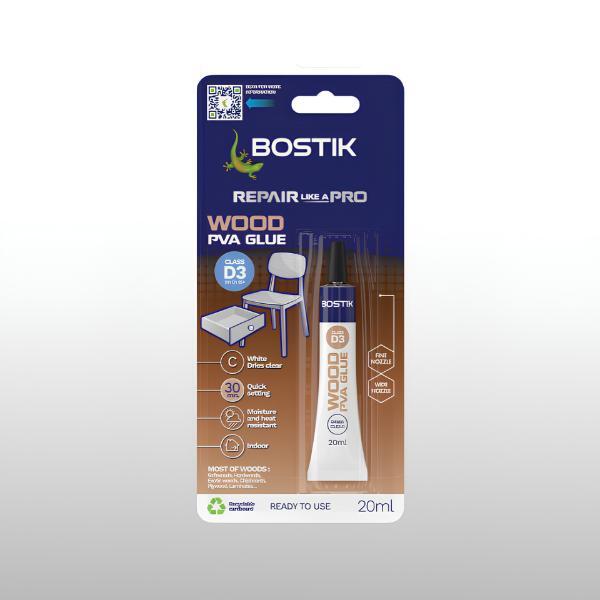
Use Bostik Wood Fix when repairing, assembling or bonding wood materials. The adhesive is specifically designed for wood applications and is suitable for wood joints, furniture repairs and other woodworking projects.
Choose Bostik Super Glue when you need a fast-curing cyanoacrylate adhesive for quick repairs and precision bonding. For projects involving wood where a dedicated wood adhesive is preferred, Bostik Wood Fix is generally the more suitable option because it has been developed specifically for wood bonding applications.
When should you use XpertFix instead of Super Glue?
Use Bostik Xpert Fix when bonding or repairing PVC, CPVC and rigid PVC materials. It is specifically formulated for pipe-related applications and creates strong, waterproof bonds on these substrates.
Choose Bostik Super Glue when you need a fast-curing cyanoacrylate adhesive for quick repairs and precision bonding on a wide range of non-porous materials. For projects involving PVC or CPVC pipe systems, Bostik Xpert Fix is generally the more suitable option because it has been developed specifically for those materials.
Which is better for leather repairs: Leather Repair or Super Glue?
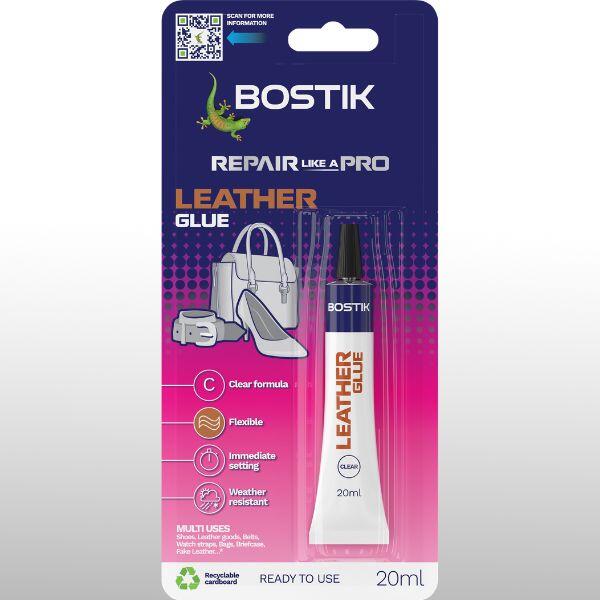
For most leather repair projects, Bostik Leather Glue is the better choice because it is specifically designed for bonding leather and imitation leather while maintaining flexibility after drying.
Bostik Super Glue is a fast-curing cyanoacrylate adhesive that creates a strong bond in seconds and can be useful for quick repairs. However, when the repaired item needs to flex during normal use, Bostik Leather Glue is generally the more suitable option.
Can I glue fabric instead of sewing?
Yes, Bostik Fabric Glue can be used instead of sewing for many fabric repairs, alterations and no-sew craft projects. It is designed to bond fabric and provides an alternative to stitching where a sewn seam is not required.
The suitability of fabric glue depends on the materials being bonded and the requirements of the project. For best results, follow the application instructions for the product and allow the adhesive to fully develop bond strength before use.
Does leather glue really work?
Yes, Bostik Leather Glue is designed for repairing leather and imitation leather items and creates long-lasting, flexible bonds. It can be used on items such as shoes, belts, bags, luggage and upholstery where flexibility is important after the repair.
Because it is specifically designed for leather repairs, Bostik Leather Glue is generally a suitable choice when the repaired item needs to flex during normal use.
Does super glue stay clear?
Bostik Super Glue Liquid and Bostik Super Glue Gel are clear adhesives, making them suitable for many repairs where the appearance of the bond is important.
For the best results, apply only a small amount of adhesive and ensure the surfaces are clean and properly aligned before bonding.
Does super glue stop water leaks?
Super glue is not designed to stop water leaks. Bostik Super Glue Liquid and Bostik Super Glue Gel are water resistant, but they are not described as waterproof or as products intended for leak sealing.
For repairing a water leak, choose a product that is specifically designed for waterproof sealing or leak repair.
How do you glue PVC together?
To glue PVC together, first make sure the surfaces are clean, dry and correctly aligned. Apply BostikXpert Fix evenly to the PVC surfaces being joined, then assemble the parts immediately according to the product instructions.
Bostik XpertFix is designed for bonding PVC and CPVC pipe systems and provides a fast-setting solution for pipe and fitting assembly.
How do you use leather repair glue?
To use Bostik Leather Glue, first make sure the surfaces are clean, dry and free from dust, dirt and grease. Apply the adhesive to the surface as directed, position the materials correctly and press them together firmly.
For leather and imitation leather repairs, careful surface preparation helps the adhesive make good contact with the material and supports a durable, flexible repair.
How to glue a leather sofa?
To glue a leather sofa, first make sure the leather surfaces are clean, dry and free from dust, dirt and grease. Apply Bostik Leather Repair Glue as directed, then position the materials correctly and press them together firmly.
Bostik Leather Repair Glue is designed for flexible repairs on leather and imitation leather and is suitable for upholstery repair applications where flexibility is important after bonding.
How do you glue tent material?
To glue tent material, make sure the surfaces are clean and dry before applying an even layer of Bostik Soft Plastics Adhesive to both sides of the repair. Allow the adhesive to become almost dry, typically 5 to 10 minutes, then press the surfaces firmly together until bonded.
Bostik Soft Plastics Adhesive is designed for flexible repairs to soft plastic materials, including tents, and forms a water-resistant bond suitable for many outdoor repair applications.
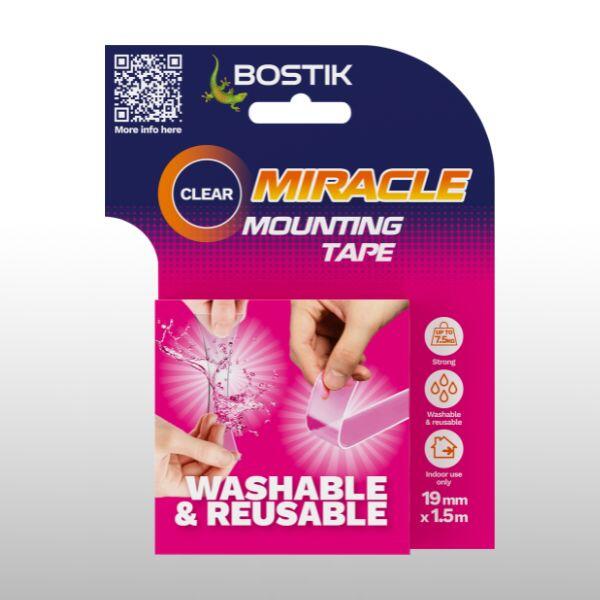
How do you make mounting tape sticky again?
To make Bostik Miracle Mounting Tape sticky again, wash the tape under water to remove dust and debris, then allow it to dry before reusing it. The tape is designed to be washable and reusable and can re-stick without loss of performance when cleaned correctly.
For the best results, reapply the tape to a clean, dry and even surface.
Is fabric glue transparent?
The appearance of a fabric adhesive can vary depending on the product. No validated evidence is currently available confirming whether Bostik Fabric Glue is transparent after application or drying.
If appearance is important for your project, check the product specifications before use.
Is mounting tape permanent?
No, Bostik Miracle Mounting Tape is designed for temporary bonding and mounting applications. It can be removed without leaving residue, washed under water and reused, making it suitable for applications where occasional removal or repositioning may be required.
Is mounting tape waterproof?
Some mounting tapes can be designed for wet or outdoor environments, but that does not necessarily mean all mounting tapes are waterproof. Bostik Miracle Mounting Tape is washable and reusable, but no validated evidence currently confirms that it is waterproof or water resistant.
For applications exposed to water or outdoor conditions, always check the product specifications before use.
Is textile glue the same as fabric glue?
Yes, textile glue and fabric glue are often used to describe the same type of adhesive. Bostik Fabric Glue is designed for bonding fabrics and textiles and can be used for fabric repairs, alterations and no-sew projects.
When choosing a fabric adhesive, check that the product is suitable for the materials being bonded and follow the application instructions for the best results.
What glue doesn't seep through fabric?
No fabric adhesive can be guaranteed not to seep through every fabric. Bostik Fabric Glue may pass through some open-weave, delicate or light-coloured fabrics, particularly if excessive adhesive or pressure is used.
For best results, test Bostik Fabric Glue on a small, inconspicuous area before starting your project.
What glue is suitable for vinyl?
The most suitable adhesive depends on the type of vinyl being repaired. For flexible PVC and vinyl materials, Bostik Soft Plastics Adhesive is designed for bonding soft plastics and creates a strong, flexible and water-resistant bond.
This makes Bostik Soft Plastics Adhesive suitable for many vinyl repair applications where flexibility and durability are important after bonding.
What is mounting tape used for?
Bostik Miracle Mounting Tape is used for temporary bonding and mounting objects and decorations where a transparent fixing solution is needed. It is suitable for indoor use on smooth and semi-smooth surfaces and can be used on materials including plastic, glass, wood, metal and ceramic.
The tape is washable and reusable, making it suitable for applications where occasional removal and re-positioning may be required.
What is the best glue for clear leather?
The best adhesive depends on the material being repaired and the flexibility required after bonding. Bostik Leather Glue is designed for flexible repairs on leather and imitation leather and can also be used on vinyl, making it suitable for a wide range of repair applications.
For repairs where the bonded material needs to flex during normal use, Bostik Leather Glue provides long-lasting, flexible bonds.
What is the best glue for inflatables?
The best adhesive for inflatables depends on the material being repaired. For inflatables made from flexible PVC and other soft plastics, Bostik Soft Plastics Adhesive is specifically designed to create strong, flexible and water-resistant repairs.
Bostik Soft Plastics Adhesive is suitable for repairing inflatables and other flexible items that need to bend and move during normal use, helping to maintain a durable repair after bonding.
What is the best wall mounting tape?
The best wall mounting tape depends on what you’re hanging, how heavy it is and the wall surface. Bostik Miracle Mounting Tape is designed for fixing and mounting objects on smooth and semi-smooth indoor surfaces and provides a transparent, removable and reusable mounting solution.
For the best results, apply Bostik Miracle Mounting Tape to a clean, dry and even surface that is free from dust, dirt and grease.
What is the strongest double-sided mounting tape?
The strongest mounting tape depends on the weight of the object, the surface and the application. Bostik Miracle Mounting Tape provides high adhesive power and can hold up to 1kg per 20cm of tape, with up to 7.5kg total strength when applied correctly.
For the best performance, apply Bostik Miracle Mounting Tape to a clean, dry and even surface and use sufficient tape to support the object being mounted.
What shouldn't you use super glue on?
Bostik Super Glue should not be used on soft plastics such as polythene, absorbent materials such as paper, objects that hold hot food or liquids, or high-stress joints. These applications may require a specialist adhesive designed for the specific material or conditions.
For the best results, always choose an adhesive that matches the materials and performance requirements of the repair.
Stuck on what glue to use?
Use this guide to find out what product to use for your job.
Start the Glue Guide