

Browse our wide selection of repair glues, perfect for small household repairs and DIY projects. The repair range includes our best super glues, specialty glues and all-purpose glues. All are expertly designed to create a secure bond to a variety of materials.




Step-by-step tutorials
Our how-to videos guide you through the best ways to use your Bostik repair adhesive, so you can get stuck into your next DIY project. The Bostik Repair range includes a variety of Super Glues in various sizes, Specialty Glues for specific repair projects, and All-Purpose Glues, all expertly designed to create a secure bond to a variety of materials.
Frequently asked questions
Are hot glue sticks safe to use?
Yes, Bostik Hot Glue Sticks are non-toxic and are suitable for a variety of craft, hobby and DIY projects.
While the glue sticks themselves are non-toxic, care should be taken when using them with a glue gun because melted adhesive and the glue gun nozzle can become hot during use. Always follow the product instructions and allow the adhesive to cool before handling bonded items.
Can I use any glue sticks with my glue gun?
No, not all glue sticks are compatible with every glue gun. The glue stick must match the size and specifications recommended for your glue gun to ensure reliable feeding and application.
Before using a new glue stick, check that it is suitable for your glue gun model. Using the correct glue stick size can help achieve consistent adhesive flow and optimal performance.
Can you repair leather with Super Glue?
No, super glue is not usually the best choice for repairing leather.
For long-lasting repairs, use Bostik Leather Repair, which is specially formulated for leather and imitation leather. Its flexible bond helps the repair move with the material and remain durable over time.
Super glue can create a rigid bond that may not provide the flexibility needed for effective leather repairs, particularly on items that bend or flex during use.
Should I use Super Glue Gel or Liquid?
The best choice depends on your project.
Choose a super glue gel if you need more control during application, are working on a vertical surface, or want a non-drip formula that allows a little extra time to position the materials before bonding.
Choose a super glue liquid if you want a fast-setting adhesive for general repairs and bonding non-porous materials such as metal, rubber, ceramics, hard plastics, leather and wood.
Both types provide strong bonds, but the application method and consistency make each product better suited to different repair tasks.
Does Super Glue work in the cold?
Yes, Bostik Super Glue works in cold conditions. Bostik Super Glue products have a working temperature range of-55°C to +80°C, making them suitable for use in a wide range of temperatures.
For the best results, ensure the surfaces being bonded are clean, dry and suitable for the intended application before applying the adhesive.
Should you leave a glue stick in a glue gun?
No, you do not normally need to remove a Bostik Hot Glue Stick from a glue gun after use. Glue sticks are designed to remain in the tool between applications and can be used again the next time the glue gun is heated.
To help prevent feeding issues, use the correct glue stick size and avoid forcing sticks through the mechanism. If a glue stick becomes jammed, allow the glue gun to cool before investigating the blockage.
What condition should surfaces be in before using Super Glue?
For the best results, Bostik Super Glue should be applied to surfaces that are clean, dry and free from dust, dirt, rust, oil and other contaminants.
Because Bostik Super Glue works best on close-fitting surfaces, removing contamination and ensuring a good fit between the materials can help create a stronger and more reliable bond.
How does Fabric Glue bond fabric?
Bostik Fabric Glue works by bonding fabric fibres together to create a flexible, durable hold without the need for sewing. Once applied, the adhesive penetrates the fabric surface and forms a strong bond as it dries.
This makes it suitable for clothing repairs, alterations, hems and a wide range of textile craft projects. For the strongest results, apply the adhesive to clean, dry fabric and allow it to dry fully before use.
How long can a glue gun last?
The lifespan of a glue gun depends on how often it is used, how well it is maintained and how it is stored.
To help extend the life of a Bostik Glue Gun, use the recommended glue sticks, follow the operating instructions and store the tool properly when not in use.
How long does it take Fabric Glue to dry?
Bostik Fabric Glue may become dry to the touch in less than 24 hours, but for the best results you should allow approximately 24 hours for the adhesive to dry fully before washing, wearing or heavily handling the repaired item.
Drying times can vary depending on the fabric type, the amount of adhesive applied and the surrounding conditions.
How do you remove spilt Super Glue from a work surface?
If Bostik Super Glue is spilled on a work surface, remove the adhesive carefully and follow the cleaning recommendations for the specific surface material.
Before using any cleaning method, test it on a small inconspicuous area first. Different surfaces can react differently, so taking a cautious approach can help reduce the risk of damage.
Is Fabric Glue washable?
Yes, Bostik Fabric Glue is washable after it has fully cured. This makes it suitable for fabric repairs, alterations and a wide range of textile craft projects.
For best results, allow Bostik Fabric Glue to cure fully before washing the repaired or bonded item.
Is Super Glue flammable?
Yes, Bostik Super Glue products are classified as flammable. They should be kept away from heat, sparks, open flames and other sources of ignition.
Always use Bostik Super Glue in accordance with the product instructions and store it safely when not in use.
Is Super Glue heat resistant?
Bostik Super Glue Liquid and Bostik Super Glue Gel are designed to withstand temperatures from -55°C to +80°C. This heat-resistant performance makes them suitable for repair and bonding applications that may be exposed to changing temperatures.
Is Super Glue waterproof?
Bostik Super Glue Liquid and Bostik Super Glue Gel are water and heat resistant. However, the available product information does not describe them as waterproof.
For projects that may be exposed to moisture, always check the product instructions and suitability for your specific application before use.
How do you remove Super Glue from your fingers?
If Bostik Super Glue gets on your fingers, avoid pulling the skin apart forcefully or trying to remove the adhesive aggressively.
For detailed step-by-step guidance, see the How to remove superglue from your fingers article, which explains how to safely deal with adhesive on skin and minimise discomfort during removal.
Why is viscosity important in adhesives?
Viscosity refers to how easily an adhesive flows. Products with a lower viscosity are thinner and spread more easily, while higher-viscosity products are thicker and offer greater control during application.
In adhesive applications, viscosity can influence how a product spreads, fills gaps and performs on vertical surfaces, making it an important factor when selecting the right adhesive for a project.
What is Super Glue made of?
Bostik Super Glue is made from cyanoacrylate, a fast-acting adhesive technology designed to create strong bonds in seconds.
When exposed to small amounts of moisture on a surface, cyanoacrylate cures rapidly to form a durable bond. This makes Bostik Super Glue suitable for a wide range of household repairs and precision bonding applications.
What is the difference between Repair All and Super Glue?
Bostik Repair All and Bostik Super Glue are designed for different types of repairs. Bostik Super Glue is a fast-curing cyanoacrylate adhesive that forms a strong bond within seconds, making it ideal for quick repairs and precision bonding.
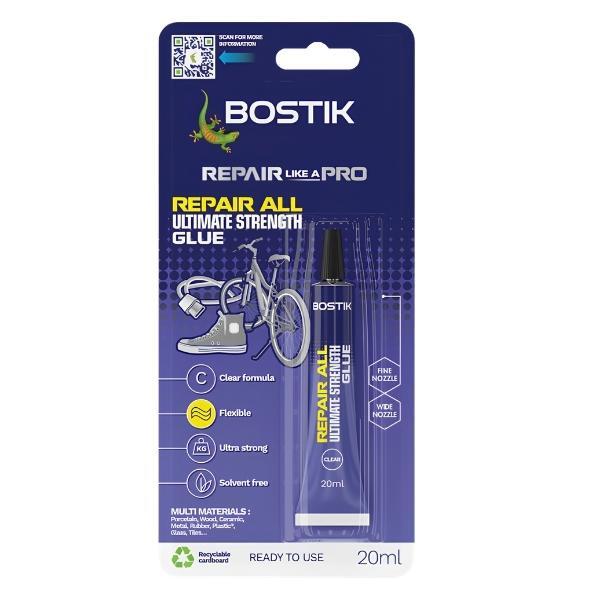
Bostik Repair All is a flexible multipurpose adhesive designed to bond a wide range of materials while accommodating movement and vibration after curing. It is often a better choice for repairs where flexibility and versatility are more important than extremely fast bonding.
What temperature does a glue gun operate at?
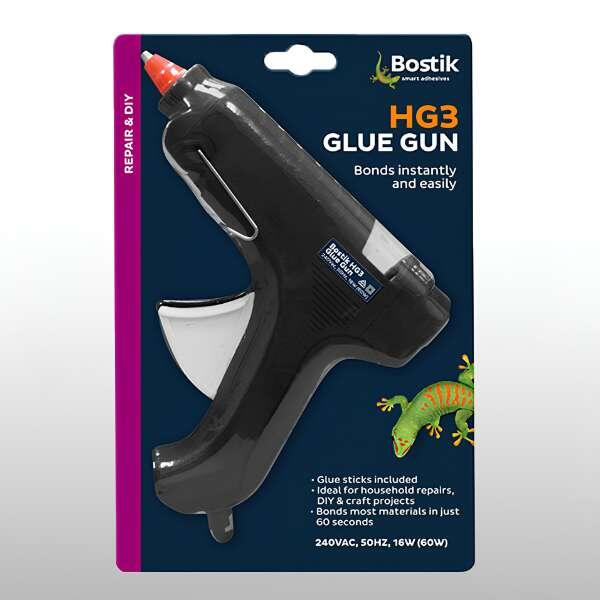
The Bostik HG3 Hot Melt Glue Gun operates at approximately 180°C, allowing hot melt glue sticks to melt and flow smoothly for bonding and craft applications.
Because the adhesive is applied in a heated state, care should be taken during use to avoid contact with hot glue or the heated nozzle. Always follow the product instructions when operating the glue gun.
How long does Super Glue last?
Bostik Super Glue has a shelf life of 12 months from the date of manufacture when stored under the recommended conditions.
For best results, store the adhesive in a cool, dry location away from direct sunlight and moisture, and keep the cap tightly closed when not in use. Proper storage can help maintain product performance throughout its shelf life.
Can Fabric Glue help prevent fraying?
Yes, Bostik Fabric Glue can help prevent fraying by bonding loose fabric fibres together and reinforcing cut or damaged edges.
This can be particularly useful for hems, repairs, alterations and craft projects where sewing may not be practical. For the best results, apply the adhesive carefully along the affected edge and allow it to dry fully before handling the fabric.
How do you remove Fabric Glue from your fingers?
If Bostik Fabric Glue gets on your fingers, remove any excess adhesive as soon as possible before it dries completely.
Wash the affected area carefully and avoid pulling dried adhesive from the skin forcefully. If adhesive remains on the skin or causes irritation, seek appropriate advice before attempting further removal.
For detailed step-by-step guidance, see the How to remove glue from your fingers article, which explains how to safely deal with adhesive on skin and minimise discomfort during removal.
How do you remove General Purpose Silicone from your fingers?
If Bostik General Purpose Silicone gets on your fingers, remove any excess sealant as soon as possible before it cures.
For uncured sealant, clean the affected area with mineral turpentine and then wash thoroughly. If skin contact occurs, wash the skin thoroughly for at least 15 minutes and remove any contaminated clothing.
For detailed step-by-step guidance, see the How to remove glue from your fingers article, which explains how to safely deal with adhesive on skin and minimise discomfort during removal.
How do you remove Hard Plastic adhesive from your fingers?
If Bostik Hard Plastic adhesive gets on your fingers, remove any excess adhesive as quickly as possible before it sets.
Before the adhesive cures, it can be removed using acetone. Wash your hands thoroughly after cleanup and avoid unnecessary skin contact when handling the product.
For a step-by-step guidance, see the How to remove glue from your fingers article, which explains how to safely deal with adhesive on skin and minimise discomfort during removal.
How do you remove Hot Melt Glue from your fingers?
If Bostik Hot Melt Glue gets on your fingers, allow the adhesive to cool completely before attempting to remove it.
Once cooled, gently peel away the hardened adhesive without forcing it. If the adhesive does not come away easily or if irritation occurs, seek appropriate assistance rather than pulling the skin aggressively.
For a step-by-step guidance, see the How to remove glue from your fingers article, which explains how to safely deal with adhesive on skin and minimise discomfort during removal.
How do you remove Leather Glue from your fingers?
If Bostik Leather Glue gets on your fingers, remove any excess adhesive as soon as possible before it fully sets.
Wash the affected area carefully and follow the product instructions for cleanup. If adhesive remains on the skin or causes irritation, seek appropriate medical advice. Avoid pulling bonded skin apart forcefully.
For a step-by-step guidance, see the How to remove glue from your fingers article, which explains how to safely deal with adhesive on skin and minimise discomfort during removal.
How do you remove Repair All from your fingers?
If Bostik Repair All gets on your fingers, wipe away any excess adhesive as soon as possible before it cures.
For cured or excess adhesive residue, use an appropriate remover such as acetone or nail varnish remover and clean the affected area carefully. Wash your hands thoroughly after cleanup.
For detailed step-by-step guidance, see the How to remove glue from your fingers article, which explains how to safely deal with adhesive on skin and minimise discomfort during removal.
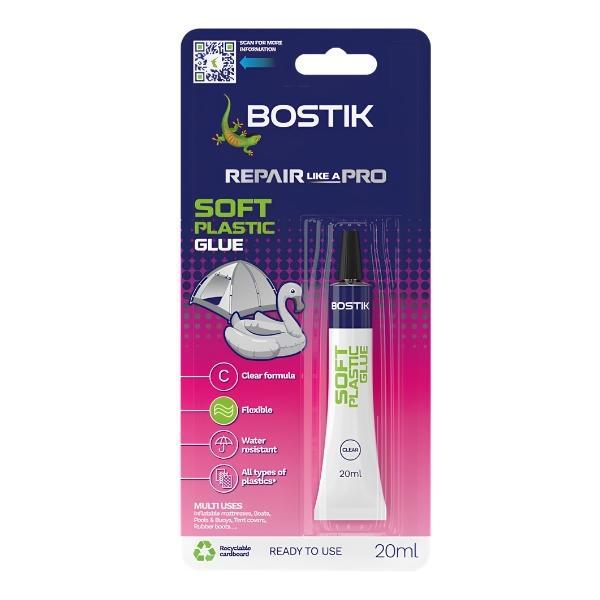
How do you remove Soft Plastic adhesive from your fingers?
If Bostik Soft Plastic adhesive gets on your fingers, remove the adhesive as soon as possible before it fully cures.
Wet or dry adhesive residue can be removed using acetone. After cleaning, wash your hands thoroughly and avoid prolonged skin contact with the adhesive.
For a step-by-step guidance, see the How to remove glue from your fingers article, which explains how to safely deal with adhesive on skin and minimise discomfort during removal.
What is the difference between General Purpose Silicone and Super Glue?
Bostik General Purpose Silicone and Bostik Super Glue are designed for different jobs. Bostik Super Glue is a fast-curing adhesive that creates strong bonds in seconds and is typically used for quick repairs and precision bonding.
Bostik General Purpose Silicone is a flexible sealant used for sealing joints, filling gaps and creating watertight seals around a range of household surfaces. If the goal is bonding materials together, Bostik Super Glue is usually the better choice. If the goal is sealing or waterproofing a joint, Bostik General Purpose Silicone is generally more suitable.
What is the difference between Fabric Glue and Super Glue?
Bostik Fabric Glue is designed specifically for bonding fabrics and textiles, making it suitable for clothing repairs, alterations, hems and other fabric-based projects. The adhesive is intended to create a bond that works with flexible materials.
Bostik Super Glue is a fast-curing cyanoacrylate adhesive that forms a strong bond within seconds on a wide range of materials. For fabric repairs and textile projects, Bostik Fabric Glue is generally the better choice, while Bostik Super Glue is more suitable for quick repairs where fabric flexibility is not the primary requirement.
What is the difference between Hard Plastic adhesive and Super Glue?
Bostik Hard Plastic adhesive is specifically designed for repairing and bonding hard plastic materials, making it a suitable choice when working with rigid plastic components and plastic repairs.
Bostik Super Glue is a fast-curing cyanoacrylate adhesive that creates a strong bond within seconds on a wide range of materials. For projects involving hard plastics, Bostik Hard Plastic is generally the more suitable option, while Bostik Super Glue is often preferred for quick repairs where a specialist plastic adhesive is not required.
What is the difference between HG3 Hot Melt Glue Gun and Super Glue?
Bostik Hot Melt Glue and Bostik Super Glue are designed for different applications. Bostik Super Glue forms a strong bond within seconds and is commonly used for quick repairs and precision bonding tasks.
Bostik Hot Melt Glue, used with the Bostik HG3 Hot Melt Glue Gun, is applied in a heated state and is often chosen for crafts, decorating, model making and general DIY projects. If speed and precision are the priority, Bostik Super Glue is often the better option. For creative projects, assembly work and larger surface areas, Bostik Hot Melt Glue is usually more suitable.
What is the difference between Leather Glue and Super Glue?
Bostik Leather Glue is designed specifically for repairing and bonding leather and imitation leather, helping to create a bond that remains flexible after curing.
Bostik Super Glue is a fast-curing cyanoacrylate adhesive that forms a strong bond within seconds. For leather items that need to bend or flex during normal use, Bostik Leather Glue is generally the more suitable choice, while Bostik Super Glue is better suited to quick, rigid repairs where flexibility is less important.
What is the difference between Soft Plastic adhesive and Super Glue?
Bostik Soft Plastic Adhesive is designed specifically for repairing and bonding soft plastic materials, making it a suitable choice for flexible plastic items and soft plastic repairs.
Bostik Super Glue is a fast-curing cyanoacrylate adhesive that forms a strong bond within seconds on many different materials. When working with soft plastics, Bostik Soft Plastic Adhesive is generally the better option, while Bostik Super Glue is often preferred for quick repairs where a specialist soft plastic adhesive is not required.
What needs to be cleaned before using Soft Plastic Adhesive?
Before applying Bostik Soft Plastic Adhesive, make sure the surfaces are clean, dry and free from dust, dirt and grease.
Cleaning away contamination before bonding helps the adhesive make better contact with the surface and can improve the quality and reliability of repairs on soft plastic materials.
What preparation is needed before using a Hot Melt Glue Gun?
Before using the Bostik HG3 Hot Melt Glue Gun, make sure the surfaces to be bonded are clean, dry and free from dust, dirt, rust, oil and other contaminants. Clean surfaces help the melted adhesive make better contact with the materials being joined.
For the best results, ensure the materials fit together correctly before applying the adhesive and press them together while the glue is still molten. Proper preparation can help improve bond quality and consistency.
What should you check before applying Fabric Glue?
Before applying Bostik Fabric Glue, check that the fabric is clean, dry and free from dust, dirt, oils and loose fibres that could affect adhesion.
Preparing the material properly helps the adhesive bond more effectively to the fabric and can improve the durability of repairs, alterations and textile craft projects. Make sure the fabric is completely dry before application.
How do you get surfaces ready for General Purpose Silicone?
Before applying Bostik General Purpose Silicone, remove any dust, dirt, grease, oil and other contaminants from the surfaces being sealed. The surfaces should also be completely dry before application.
To help achieve the best sealing performance, ensure the application area is smooth and free from loose material that could interfere with adhesion. Proper preparation helps create a more reliable seal around joints, gaps and household fixtures.
What makes a surface ready for Repair All?
Before applying Bostik Repair All, ensure the bonding surfaces are clean, dry and free from dust, grease, oil and loose material that could interfere with adhesion.
Good contact between the materials is important for achieving a strong bond, so remove any surface contamination and make sure the parts fit together properly before applying the adhesive.
How do you get leather ready for repair?
Before applying Bostik Leather Glue, ensure the leather or imitation leather is clean, dry and free from dust, grease, polish and surface residues.
Preparing the material properly helps the adhesive make full contact with the repair area and can improve the durability of the finished repair. Allow the surface to dry completely before applying the adhesive.
How do you get hard plastics ready for bonding?
Before applying Bostik Hard Plastic Adhesive, make sure all surfaces are clean, dry and free from dust, dirt and grease.
For the best results, remove any contamination that could interfere with adhesion and ensure the parts are properly aligned before bonding. Good preparation helps achieve a stronger and more reliable repair on hard plastic items.
Stuck on what glue to use?
Use this guide to find out what product to use for your job.
Start the Glue Guide