
CAR SILICONE SEALANT
Bostik Car is a high-performance black silicone sealant designed as a flexible and durable automotive silicone for sealing, bonding, and repairs. This silicone for cars provides a long-lasting, waterproof car seal suitable for use inside, outside, and underneath vehicles. Suitable as a windscreen silicone and general automotive sealant, it offers excellent resistance to UV, weathering, and chemicals. This reliable silicone adhesive also performs well for DIY applications where a strong, flexible black finish is required.
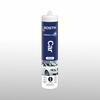
Black
Features & benefits
Bostik Car is a high-performance black silicone sealant designed to provide a permanently flexible, durable, and watertight car seal for automotive applications. This one-part acetoxy curing silicone sealant delivers excellent resistance to UV radiation, weathering, ageing, and water, ensuring long-lasting performance in demanding environments. It also offers strong resistance to chemicals such as alcohols, diluted acids, alkalis, and detergents. Formulated as a versatile automotive silicone, it remains flexible across a wide temperature range and features a non-sag formulation for easy application on vertical surfaces. This silicone adhesive also performs as an effective gap-filling solution on non-porous surfaces, making it suitable for both automotive and DIY use.
Surface Compatibility
Bostik Car exhibits excellent primerless adhesion to a wide range of non-porous materials, including ceramics, glass, enamel, porcelain, coated wood, painted surfaces, stainless steel, aluminium, and certain rubbers and plastics such as acrylics, polycarbonates, polyester, and rigid PVC. Making it a reliable silicone glue and silicone adhesive for applications where strong, flexible bonding is required.
Smart advantages

100% waterproof
Permanently flexible
Low shrinkage
Excellent colour fastness
Downloads & resources
Bostik DIY South Africa Seal - Car Silicone Sealant Technical Data Sheet (439.9 KB)
Bostik DIY South Africa Seal - Car Silicone Sealant Safety Data Sheet (86.4 KB)
How to use
Applications
This silicone for cars is ideal for sealing joints, gaps, and cracks inside, outside, and underneath vehicles. It is suitable for applications such as sealing leaking window joints, water hoses, low-temperature gasket applications, and use as a windscreen silicone. In addition to automotive use, this automotive sealant is also suitable for sealing, bonding, and mending DIY tasks around the home where a black silicone sealant finish is required.
Ensure surfaces are clean, dry and free of loose materials, dust, grease, rust and other contaminants. Use masking tape to get a clean, even sealant line and to eliminate cleaning difficulties on porous surfaces. Remove tape before sealant skins.
90ml Tube
- Remove the cap and pierce seal with reverse side of cap.
- Cut the nozzle to desired bead size and screw onto tube.
- Apply silicone at a slight angle in a continuous bead to the prepared joint.
- After use, remove the nozzle, wipe clear and replace the cap firmly.
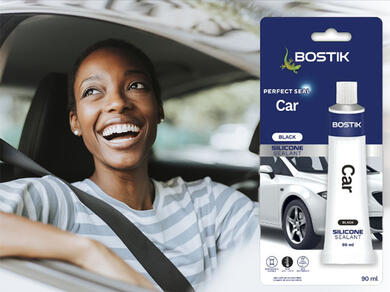
280ml Cartridge
- Cut the tip off the cartridge and screw on the nozzle.
- Cut the tip of the nozzle at an angle to achieve the desired bead size.
- Apply with a caulking gun in a continuous bead to the prepared joint.
- Remove unwanted silicone immediately.
- Smooth down after application within 3-5 min before skin formation occurs, by using a flat or rounded tool.
- Sealant dries to touch in approximately 45 minutes and reaches full cure after approximately 24 hours.
Limitations
- This bostik car silicone sealant is not suitable for cylinder head gaskets or parts permanently exposed to fuel.
- It is also not suitable for alkaline surfaces such as concrete, fibrous cement, plaster, asbestos, or marble. Use on certain metals including mild steel, lead, copper, tin, galvanized iron, brass, or zinc may cause corrosion.
- The sealant is not paintable and may discolour when in contact with some organic elastomers such as EPDM, APTK, Neoprene, and bituminous materials.
- Not suitable for mirrors as it may damage the reflective backing, or for natural stone surfaces such as marble, granite, and quartzite due to potential staining. It will not adhere to some plastics including polyethylene, polypropylene, and Teflon.
- Not suitable for fish tanks due to the presence of a fungicide. Application should also be avoided when relative humidity is below 10%, as this may affect curing performance.
Calculator
FAQs
How do I store my silicone?
To maximize the shelf life of an opened silicone cartridge, we recommend that the nozzle be removed and a piece of plastic placed over the cartridge tip after which the nozzle must be screwed back on. A large screw inserted into the nozzle tip also helps to extend the life. Store in a cool environment.
How do I remove cured silicone?
Cured sealant must be removed mechanically with a sharp knife or chemically with Bostik Silicone Stripper. Always test on a small surface first.
Which sealant is the right one for my application?
Our Glue Guide can help you find the best adhesive for your application.
How to clean silicone sealant?
For best results, clean silicone sealant while it is still uncured using a solvent such as turpentine or paraffin and a clean cloth. Once cured, the sealant can only be removed mechanically, for example with a sharp knife, or with a dedicated silicone remover.
How to dissolve silicone sealant
Cured silicone sealant cannot simply be dissolved. It must be removed either mechanically or by using a specialised silicone stripper designed to break down the material.
Stuck on what glue to use?

Use this guide to find out what product to use for your job.
Start the Glue Guide