How to remove Blu Tack® marks and stains from walls
Picture the scene, your kids are ready for their next life stage and they need a room revamp to reflect it. You’re trying to smarten up their bedroom after leaving it in their “creative” hands for a bit too long.
You have taken down all the pictures, posters and drawings that have decorated their space over the years. But, to get the room back to a perfect blank canvas, you may still need to remove some Blu Tack® stains left behind on the walls - that’s whether you’re redecorating over old paint, or just opting for a bit of a tidy up.
Follow our simple step-by-step guide and discover how to get rid of Blu Tack® on walls.

Does Blu Tack® stain walls?
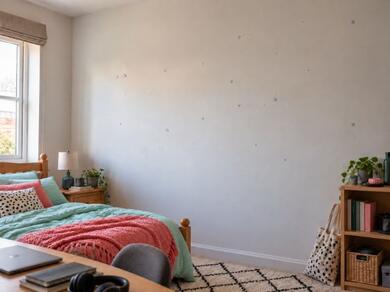
Blu Tack® is unlikely to leave a permanent mark on suitable non-porous surfaces, such as glass, metal, vinyl-coated wallpaper and many painted surfaces, when used and removed correctly.
However, Blu Tack® can sometimes leave a slight oily mark on porous, absorbent or recently decorated surfaces, particularly when it has been left in place for a long time.
The good news is that if you do spot a mark, there are a few simple steps you can take to remove Blu Tack® residue from your wall.
Instructions

How to remove Blu Tack® without damaging paint
If you’re removing Blu Tack® from a painted wall, the most important thing is to work slowly.
Roll the Blu Tack® away rather than pulling it sharply from the surface. If any residue remains, avoid scrubbing the wall. Instead, test your chosen cleaning method somewhere inconspicuous before gently dabbing the affected area.
The type, age and condition of the paint can affect how well the surface withstands cleaning, so take extra care with recently painted, delicate or absorbent finishes.
What are the best surfaces for Blu Tack®?
Blu Tack® is the original reusable adhesive, providing a convenient alternative to drawing pins and sticky tape for thousands of uses around the home, office and school.
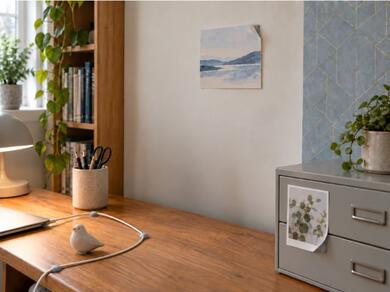
Blu Tack® performs best on suitable non-porous surfaces, including painted surfaces, vinyl-coated wallpaper, glass and metal.
Avoid using Blu Tack® on absorbent, porous or recently decorated surfaces. This includes silk-screen printed or hand-stencilled wallpaper and porous brickwork, as an oily mark may develop when Blu Tack® is left in place for a long time.
Frequently asked questions
Can Blu Tack® be reused?
Yes. Blu Tack® is a reusable adhesive, so once you've carefully removed it from a suitable surface, you can use it again.
Can you remove Blu Tack® from a painted wall?
Yes. Carefully roll the Blu Tack® away instead of pulling it sharply. If a mark remains, test any cleaning product on an inconspicuous area before treating it, as different paints and finishes may react differently to cleaning.
Does Blu Tack® damage walls?
Blu Tack® should not damage suitable surfaces when used and removed correctly. However, it can leave an oily mark on porous, absorbent or recently decorated surfaces, especially if it is left in place for a long time.
Does white tack stain walls?
Like original Blu Tack®, white tack can leave a mark on porous or unsuitable surfaces over time. Always follow the product instructions and take care when using reusable adhesives on recently decorated or delicate surfaces.
How do you get Blu Tack® residue off a wall?
Start by gently rolling the Blu Tack® away from the wall. Use another piece of Blu Tack® to dab away small pieces that remain. If there is an oily mark, patch-test a suitable cleaner before gently dabbing the area with a clean cloth and blotting it dry.