PVA glue explained: uses, drying time and finishes
PVA glue is a versatile adhesive that’s popular for crafts, school projects and everyday DIY tasks. Easy to use and quick to apply, it creates a strong bond while drying clear, helping to keep your finished project looking neat and professional.
In this guide, we’ll explain what PVA glue is, how long it takes to dry, and the best ways to use it. Whether you're making paper crafts, building models or tackling creative projects at home, PVA glue is a reliable choice for a wide range of applications.
What is PVA glue?
PVA glue is a water-borne adhesive used for many craft, school, and light DIY tasks. The name PVA relates to the adhesive base, which includes polyvinyl alcohol and vinyl acetate. In everyday use, it is often called white glue because it looks white in the bottle and when first applied.
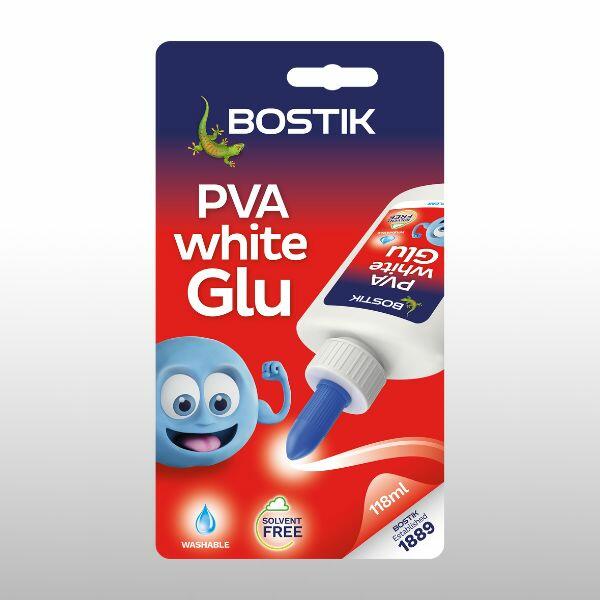
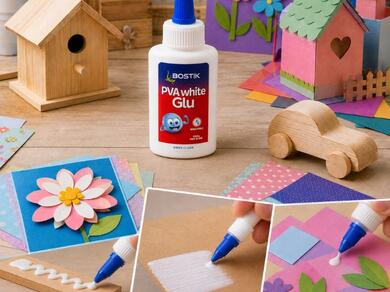
Bostik PVA Glue is a liquid PVA glue supplied in an easy-to-use resealable bottle. It is solvent free, odour-free and designed to dry clear, which makes it practical for creative projects where a clean finish matters.
Key features of PVA glue
PVA glue is often chosen for craft and school projects because it combines simple applications with a clean-looking finish.
Bostik’s PVA white Glu is a multi-purpose, solvent-free white glue that dries clear, comes in an easy-to-use bottle with a resealable cap and is designed to be UKCA and CE compliant. It is also odour-free and washable before drying, helping make creative projects easier to manage at home or in school.
Dries clear for a neat finish
It is white when applied, then dries clear or slightly transparent. This helps reduce visible glue marks on paper crafts, card making, modelling, and decorative projects where the final finish matters.
Bonds common craft materials
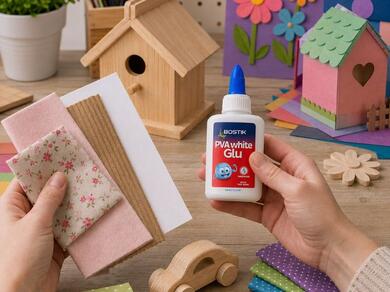
PVA glue works well for many porous craft materials. It bonds to most materials used in everyday craft projects, including paper, card, wood, and fabric. This makes it useful when a project combines several surfaces, such as scrapbook pages, wooden models, or fabric details.
Easy to use and clean
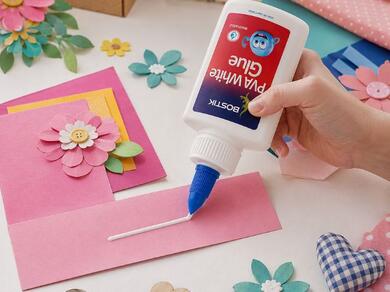
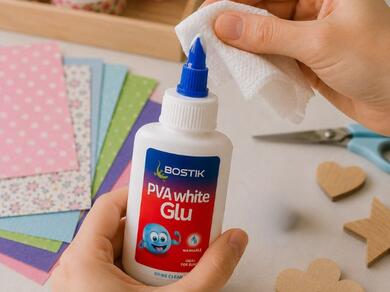
Bostik PVA white Glu is supplied in an easy-to-use plastic bottle with a resealable cap. For application, the nozzle is opened, the bottle is squeezed gently, and the glue is applied to one or both surfaces. Any excess glue can be removed with a damp cloth, and glue on clothes can be washed out with warm soapy water, ideally before it dries.
Low odour and suitable for school or home projects
Bostik PVA Glue is solvent free and odour-free. It has also been designed to be UKCA and CE compliant, making it suitable for both school and home craft projects when used according to product guidance.
Clear, white and transparent PVA finishes
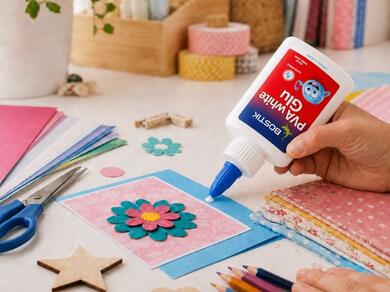
PVA glue is often described as white glue because it looks white when it comes out of the bottle. As it dries, the finish can become clear or slightly opalescent, depending on the amount applied and the material underneath. This means that it's often described as pva glue clear, transparent pva glue and translucent pva glue as well.
For a neat result, apply a thin, even layer and wipe away excess glue before it dries. A heavy layer may stay more visible than a fine coating.
Common uses for PVA glue in craft and DIY projects
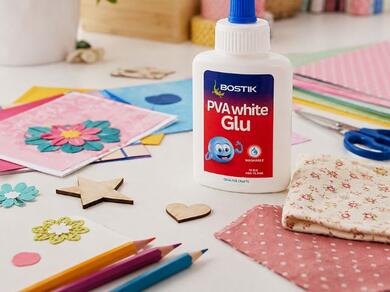
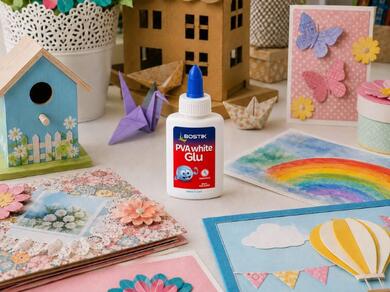
Popular for a wide range of creative activities, PVA craft glue is easy to apply, washable, and suitable for many common crafting materials. It works particularly well for scrapbooking, card making, modelling and school projects, where a standard glue bottle is often easier to handle than a specialist adhesive.
Beyond basic sticking tasks, it can also be used for making slime, adding a glossy finish to projects, or mixing with powder paints for finger painting. To achieve the best results, apply a thin, even layer, press the materials firmly together, and wipe away any excess with a damp cloth before it dries.
What materials can PVA glue stick to?
PVA glue is best suited to porous craft materials that can absorb some of the adhesive.
Bostik's version bonds paper, card, wood and fabric, making it useful for everyday creative work, school projects and light making tasks. Some of the most popular applications and uses include:
- Paper crafts like cards, scrapbooks, and collages
- Decoupage (mixed with water) for decorating surfaces
- Sticking foam, fabric, and lightweight craft materials
- General school use including within paper and simple projects
- Mounting posters and school presentations
- Making slime or sensory play (with supervision)
- Small wood repairs and light woodworking
- Fixing loose wallpaper edges
- Sealing porous surfaces like MDF or cardboard before painting
- Sealing envelopes and repairing torn paper or labels
Drying times for PVA glue
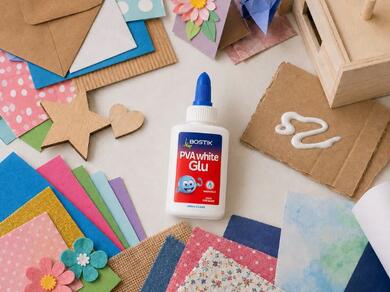
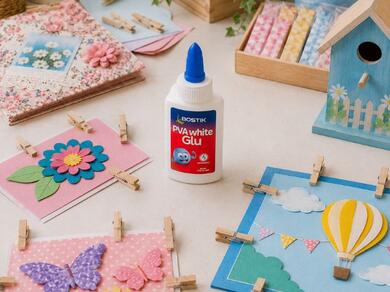
Drying time depends on the material the glue is applied to, how much glue is applied and the room conditions. A thin layer usually dries more evenly than a thick bead, so it is better to apply only the amount needed for the surface.
For Bostik PVA Glue, full cure on paper and card takes around 12 hours. On wood, full cure takes around 24 hours. For craft projects, leave the glued pieces flat and avoid moving them while the bond develops. This helps keep edges aligned and reduces marks on the finished piece.
Step-by-step: How to apply PVA glue
Good preparation helps the glue spread evenly and bond properly. Before you start, protect your work surface and check that the materials are clean and dry.
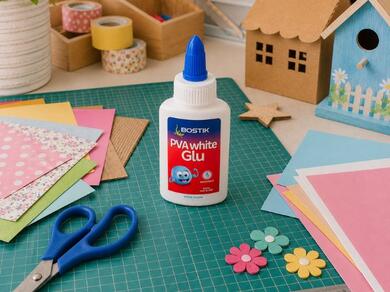
1. Prepare the work area
Open and use the PVA adhesive over a protected work surface to help avoid unwanted marks.
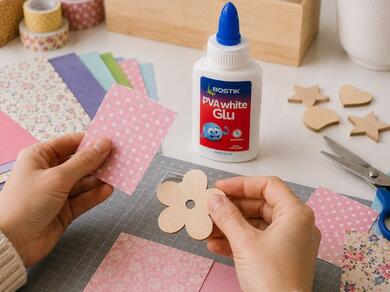
2. Check the surfaces
Make sure the surfaces are clean and dry before applying the glue.
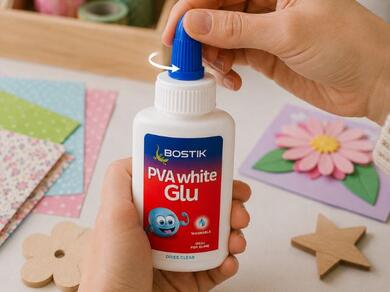
3. Open the nozzle
Twist the nozzle anticlockwise.
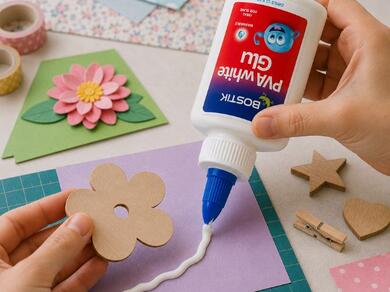
4. Apply the glue
Gently squeeze the PVA glue bottle and apply the glue to one or both surfaces.
5. Wait for tack on non-porous surfaces
For non-porous surfaces, allow the glue to become tacky to the touch before bringing the surfaces together.
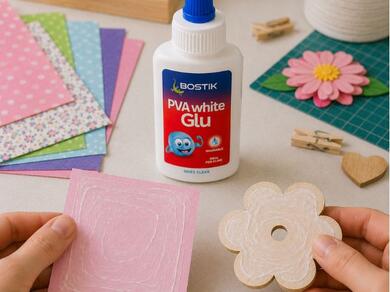
6. Close the bottle after use
Wipe the nozzle, then turn it clockwise to help stop the glue from drying out.
PVA glue compared with other glues
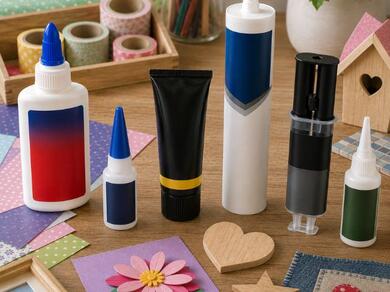
PVA glue is different from many “normal” glues because it is a water-borne craft adhesive rather than a solvent-based, instant or specialist repair glue. It is a good fit for porous materials, creative work, and jobs where a clean drying finish is useful.
Other glues may be designed for faster grab, outdoor use, flexible repairs, or specific materials. That is why the best choice depends on what you are sticking, how strong the bond needs to be, and whether the finish needs to stay discreet.
Browse our full range: We have application or material specific glues for a wide range of DIY jobs or craft projects. Discover the full range of craft glues and repair glues.
The perfect ‘school glue’
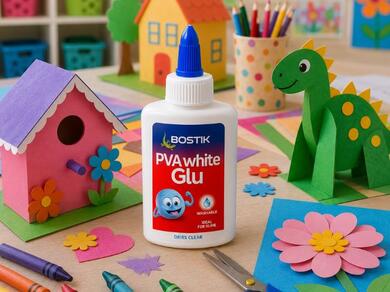
Often, PVA glue is referred to as a multi-purpose glue because it can be used on so many different materials and in multiple applications. It’s easy-to-use formula also makes it a clear favourite for school use which is why it’s known as ‘school glue’. It’s simple to apply, washable, and suitable for common classroom materials such as paper and card, making it perfect for both home and classroom projects such as scrapbooking, card making and modelling.
PVA glue compared with other glues
Different types of PVA glue suit different jobs. Some are standard craft or school glues, while others are made for wood bonding, exterior use or larger trade tasks such as surface preparation. These products may all sit under the wider PVA category, but they are not used in the same way.
For arts and crafts, Bostik PVA Glue works as a general-purpose stationery adhesive. It is water-borne and supplied in an easy-to-use bottle, making it suitable for projects such as scrapbooks, card making, modelling and school work. It bonds to common craft materials including paper, card, wood and fabric, then dries clear or slightly opalescent for a neat finish.
For wood-focused projects, a dedicated PVA wood glue may be a better match because it is made specifically for timber bonding. Trade-style PVA products used in larger quantities, such as for priming or preparation work, are different again in format and application. Choosing the right glue depends on the project type, the material and the finish you need.
Choosing the right glue for the job
PVA is a versatile household essential because it covers many everyday craft, school and simple DIY tasks in one easy-to-use format. For paper, card, wood and fabric projects, Bostik PVA Glue gives a clean, clear-drying finish and is washable before dry, which makes it practical for creative work at home or in school. It is a good choice when you need a solvent-free, odour-free glue for neat indoor projects, especially where the glue line should stay discreet.
Choose PVA glue for crafts, modelling, card making, scrapbooks and other porous materials that need a simple liquid adhesive. For specialist jobs, such as exterior repairs, heavy-duty bonding, dedicated woodwork or materials not listed in the product guidance, a different adhesive may be more suitable. The best choice depends on the material, the strength needed, the working conditions and the finish you want.